PositionByClustering: Establishing positions driven by similarities
Context
The goal of the algorithm is to find an organization of the VoltageLevel with no other information than the graph itself.
Algorithm
Principle
The positioning is based on sequential merges of BSCluster considering:
the fact that all external cells and any “leg” of an
InternCellshall be stackable - meaning, that all the corresponding busbars are aligned in parallel to be able to connect them with a vertical string of isolators. This implies thebusNodesof a leg shall be spread in different vertical structural positions. The initialization of theVerticalBusSetsreflects this constraint.attractivity, which is expressed in terms of strength of a
Linkbetween sides (left/right) ofBSCluster. The stronger the link, the more likely it is to be subject to a merge.
The name of the implementation comes from the fact that BSClusters are absorbing one another growing clusters to a single one.
Steps
PositionByClustering::indexBusPositionbuilds theMap<BusNode, Integer> busToNb. (The sorting order (BusNode::getId) only goal is to avoid randomness.)PositionByClustering::organizeBusSets:builds
List<BSCluster>bsClusterscalls
Links::create, which creates:bsClusterSideswith all the initialBSClusterSide(ieRIGHTandLEFTfor eachBSCluster)linkSetwith all the feasibleLinkbetween them, sorted by the “strength” of their similarities
successively:
merges the
BSClusterSideof the first (and strongest)Link,updates
bsClusterSideslist andlinkSet. (Each merge reducing their size.)until
linkSetis empty (andbsClusterSidesreduced to both sides of a single encompassingBSCluster)
calls
tetrisHorizontalBusListswhich arranges theHorizontalBusListsto reduce their number, and consequently the number of necessarybusbarIndexmerging them when they don’t overlap.transfers the resulting structure into
BusNode.busbarIndexandBusNode.sectionIndex, andExternCell.order.the remaining
BSClusteris ready to be processed bySubsectionclass.
Dedicated classes
The BSClusterSide class
The BSClusterSide is a composition of a BSCluster and a Side (LEFT/RIGHT).
The BSClusterSide class provides methods to evaluate its contribution to the strength of a Link (see below).
It is necessary to make the distinction between the sides of BSCluster when looking for similarities for merging. Indeed, once a BSCluster grows and has more than one VerticalBusSet, the attractivity characteristics of both sides are differing. For example, one BusNode could be right at the edge of the LEFT side in a HorizontalBusList that has other BusNodes (on its right). For linking with COMMONBUSES, the BusNode will be exposed only on the LEFT side.
The Link class
The key principle of the algorithm relies on the fact that the Link class implements Comparable, comparing the strength of each considered Link. This is established by a lexicographic comparison of grades sorted per Category.
The enum Category defines a lexicographic order of the considered similarities kinds between 2 BSClusterSides:
COMMONBUSESFLATCELLSCROSSOVERSHUNT
The Link class holds:
2
BSClusterSide,a map that holds the similarity grade per
Category.
Therefore, the comparison between 2 Link is as follows:
the more buses there is in common between the 2
BSClusterSidesthe greater the similarity is.If equal, then compare flat cells (see note below) as follows:
100 * number of common candidate flat cells.
minored by the sum of the distances between each flat cell and the edge of each
BSClusterSide(more details in the note below)
if equal, then the number of
InternCellthat will never become flat (and will have to cross over the layout) is comparedif equal, then compare the attractivity of
ShuntCellsin common (i.e., having oneExternCellin eachBSClusterSideand for which attractivity is assessed considering their distance to the considered side edge).
Note – About flat cells:
At that stage, they are only considered potential flat cell (their type is
CANDIDATEFLATCELL). They will have to be confirmed asFLATCELLlater inSubsection,The flat cells are identified when both legs are at the appropriate side of the 2 considered
BSClusterSide, which means they are:
at the beginning of a
HorizontalBusSetif theBSClusterSideisLEFTat the end if it is
RIGHTFor a leg, respecting this criteria does not imply the distance to the edge is 0. For example, in the case of the
LEFTside of theBSClusterSide, theBusNodeinvolved in the cell shall be at the beginning of itsHorizontalBusSet, but this does not imply the starting index of theHorizontalBusSetto be 0. The distance to the edge is this starting index.The value 100 that multiplies the number of flat cells is arbitrary. It must be big enough so that the number of flat cells is fostered over the penalty of the distances to the edges. By doing so, the distance minoration discriminates only when the numbers of flat cells are the same.
Important – Link and side:
No
Linkshall be created between bothBSClusterSideof the sameBSClusteras it is not possible to merge them.Two
BSClusterSidehaving the same side can have aLink. If they are to be merged, one will be flipped.
The Links class
The Links class holds and manages:
bsClusterSides: a list of all theBSClusterSidea
TreeSet<Link>linkSet: which stores all theLinkfeasible between thebsClusterSideselements. ThislinkSetis sorted according to theComparableimplemented byLink.
When a Link is selected for a merge of its BSClusterSide, all the Link involving any of both BSClusterSide are destroyed. New Link are created between both (left/right) BSClusterSide created with the newly merged BSCluster and each element of bsClusterSides. Therefore, linkSet always contains an updated sorted set of all the feasible Link.
Example
Input information
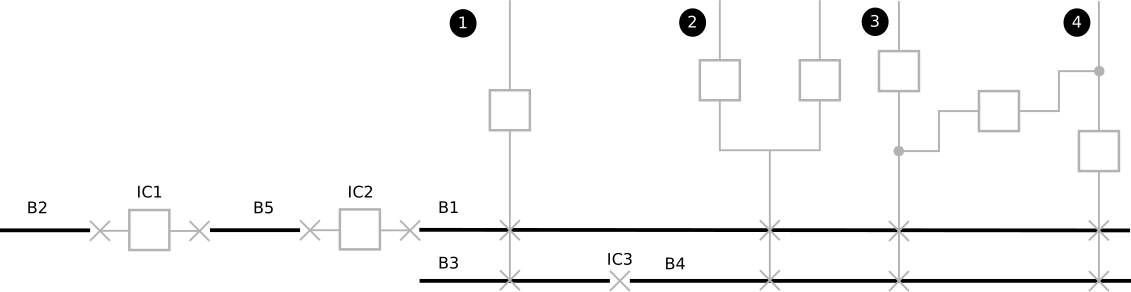
The raw graph looks:
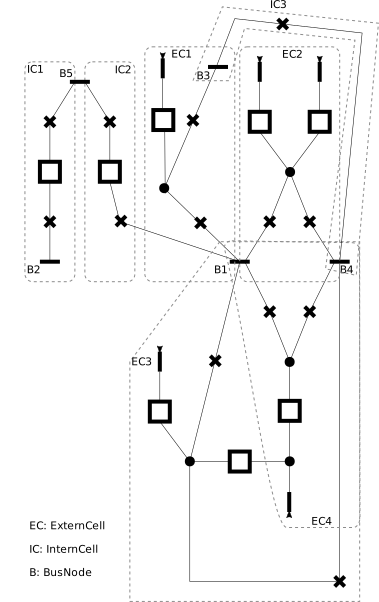
Steps
Step 1: Build of VerticalBusSets
Contrary to PositionFromExtension no order is necessary, let’s arbitrarily use the suffix in the name of the BusNode.
vbs |
BusNodes(busBarIndex, sectionIndex) |
ExternCells |
InternCellSides |
|---|---|---|---|
vbs-1 |
[ B1(2, 2), B3(1, 2) ] |
[ EC1 ] |
[ IC2.R, IC3.L ] |
vbs-2 |
[ B1(2, 2), B4(1, 3) ] |
[ EC2, EC3, EC4 ] |
[ IC3.R ] |
vbs-3 |
[ B2(2, 1) ] |
[ IC1.L ] |
|
vbs-4 |
[ B5(1, 1) ] |
[ IC1.R, IC2.L ] |
Step 2.1: Build of unitary BSCluster
BSCluster |
VerticalBusSets |
HorizontalBusLists |
|---|---|---|
bsc-1 |
[ ( [ B1, B3 ] , [ EC1 ] , [ IC2.R, IC3.L ] ) ] |
[ [ B1(2, 2) ] , [ B3(1, 2) ] ] |
bsc-2 |
[ ( [ B1, B4 ] , [ EC2, EC3, EC4 ] , [ IC3.R ] ) ] |
[ [ B1(2, 2) ], [ B4(1, 3) ] ] |
bsc-3 |
[ ( [ B2 ] , , [ IC1.L ] ) ] |
[ [ B2(2, 1) ] ] |
bsc-4 |
[ ( [ B5 ] , , [ IC1.R , IC2.L ] ) ] |
[ [ B5(1, 1) ] ] |
Step 2.2: Build the list of BSClusterSide and link them
Here is a list of all the Link that are created with the original list of BSCluster, and the grade assessed per Category.
BSClusterSide1 |
BSClusterSide2 |
Common Buses |
Flat cells |
Crossover |
Shunt |
|---|---|---|---|---|---|
bsc-1.L |
bsc-2.L |
[B1]-> 1 |
[IC3]-> 100*1 = 100 |
0 |
0 |
bsc-1.L |
bsc-2.R |
[B1]-> 1 |
[IC3]-> 100*1 = 100 |
0 |
0 |
bsc-1.R |
bsc-2.L |
[B1]-> 1 |
[IC3]-> 100*1 = 100 |
0 |
0 |
bsc-1.R |
bsc-2.R |
[B1]-> 1 |
[IC3]-> 100*1 = 100 |
0 |
0 |
bsc-1.L |
bsc-3.L |
0 |
0 |
0 |
0 |
bsc-1.L |
bsc-3.R |
0 |
0 |
0 |
0 |
bsc-1.R |
bsc-3.L |
0 |
0 |
0 |
0 |
bsc-1.R |
bsc-3.R |
0 |
0 |
0 |
0 |
bsc-1.L |
bsc-4.L |
0 |
[IC2]-> 100*1 = 100 |
0 |
0 |
bsc-1.L |
bsc-4.R |
0 |
[IC2]-> 100*1 = 100 |
0 |
0 |
bsc-1.R |
bsc-4.L |
0 |
[IC2]-> 100*1 = 100 |
0 |
0 |
bsc-1.R |
bsc-4.R |
0 |
[IC2]-> 100*1 = 100 |
0 |
0 |
bsc-2.L |
bsc-3.L |
0 |
0 |
0 |
0 |
bsc-2.L |
bsc-3.R |
0 |
0 |
0 |
0 |
bsc-2.R |
bsc-3.L |
0 |
0 |
0 |
0 |
bsc-2.R |
bsc-3.R |
0 |
0 |
0 |
0 |
bsc-2.L |
bsc-4.L |
0 |
0 |
0 |
0 |
bsc-2.L |
bsc-4.R |
0 |
0 |
0 |
0 |
bsc-2.R |
bsc-4.L |
0 |
0 |
0 |
0 |
bsc-2.R |
bsc-4.R |
0 |
0 |
0 |
0 |
bsc-3.L |
bsc-4.L |
0 |
[IC1]-> 100*1 = 100 |
0 |
0 |
bsc-3.L |
bsc-4.R |
0 |
[IC1]-> 100*1 = 100 |
0 |
0 |
bsc-3.R |
bsc-4.L |
0 |
[IC1]-> 100*1 = 100 |
0 |
0 |
bsc-3.R |
bsc-4.R |
0 |
[IC1]-> 100*1 = 100 |
0 |
0 |
Let’s remove the unnecessary fields for the example (Crossover and Shunt) and sort the table according to the Link order.
BSClusterSide1 |
BSClusterSide2 |
Common Buses |
Flat cells |
|---|---|---|---|
bsc-1.L |
bsc-2.L |
[B1]-> 1 |
[IC3]-> 100*1 = 100 |
bsc-1.L |
bsc-2.R |
[B1]-> 1 |
[IC3]-> 100*1 = 100 |
bsc-1.R |
bsc-2.L |
[B1]-> 1 |
[IC3]-> 100*1 = 100 |
bsc-1.R |
bsc-2.R |
[B1]-> 1 |
[IC3]-> 100*1 = 100 |
bsc-3.L |
bsc-4.L |
0 |
[IC1]-> 100*1 = 100 |
bsc-3.L |
bsc-4.R |
0 |
[IC1]-> 100*1 = 100 |
bsc-3.R |
bsc-4.L |
0 |
[IC1]-> 100*1 = 100 |
bsc-3.R |
bsc-4.R |
0 |
[IC1]-> 100*1 = 100 |
bsc-1.L |
bsc-4.L |
0 |
[IC2]-> 100*1 = 100 |
bsc-1.L |
bsc-4.R |
0 |
[IC2]-> 100*1 = 100 |
bsc-1.R |
bsc-4.L |
0 |
[IC2]-> 100*1 = 100 |
bsc-1.R |
bsc-4.R |
0 |
[IC2]-> 100*1 = 100 |
bsc-1.L |
bsc-3.L |
0 |
0 |
bsc-1.L |
bsc-3.R |
0 |
0 |
bsc-1.R |
bsc-3.L |
0 |
0 |
bsc-1.R |
bsc-3.R |
0 |
0 |
bsc-2.L |
bsc-3.L |
0 |
0 |
bsc-2.L |
bsc-3.R |
0 |
0 |
bsc-2.R |
bsc-3.L |
0 |
0 |
bsc-2.R |
bsc-3.R |
0 |
0 |
bsc-2.L |
bsc-4.L |
0 |
0 |
bsc-2.L |
bsc-4.R |
0 |
0 |
bsc-2.R |
bsc-4.L |
0 |
0 |
bsc-2.R |
bsc-4.R |
0 |
0 |
Step 3: Merge of BSClusters into a single one
At the first iteration, the Link between bsc-1.L and bsc-2.L is the strongest. Let’s merge them into bsc-12:
BSCluster |
VerticalBusSets |
HorizontalBusLists |
|---|---|---|
bsc-12 = bsc1 + bsc2 |
[ ( [ B1, B3 ] , [ EC1 ] , [ IC2.R, IC3.L ] ), |
[ [ B1(2, 2) , B1(2, 2) ], |
bsc-3 |
[ ( [ B2 ] , , [ IC1.L ] ) ] |
[ [ B2(2, 1) ] ] |
bsc-4 |
[ ( [ B5 ] , , [ IC1.R , IC2.L ] ) ] |
[ [ B5(1, 1) ] ] |
Note - regarding the merge:
B1 is common to both, and therefore B1 spans over 2 indexes in its resulting
HorizontalBusListIC3 links B3 and B4 so they are merged in the same
HorizontalBusList
Let’s update the list of Link.
BSClusterSide1 |
BSClusterSide2 |
Common Buses |
Flat cells |
|---|---|---|---|
bsc-3.L |
bsc-4.L |
0 |
[IC1]-> 100*1 = 100 |
bsc-3.L |
bsc-4.R |
0 |
[IC1]-> 100*1 = 100 |
bsc-3.R |
bsc-4.L |
0 |
[IC1]-> 100*1 = 100 |
bsc-3.R |
bsc-4.R |
0 |
[IC1]-> 100*1 = 100 |
bsc-12.L |
bsc-4.L |
0 |
[IC2]-> 100*1 = 100 |
bsc-12.L |
bsc-4.R |
0 |
[IC2]-> 100*1 = 100 |
bsc-12.R |
bsc-4.L |
0 |
[IC2]-> 100*1 = 100 |
bsc-12.R |
bsc-4.R |
0 |
[IC2]-> 100*1 = 100 |
bsc-12.L |
bsc-3.L |
0 |
0 |
bsc-12.L |
bsc-3.R |
0 |
0 |
bsc-12.R |
bsc-3.L |
0 |
0 |
bsc-12.R |
bsc-3.R |
0 |
0 |
Now the strongest link is between bsc-3.L and bsc-4.L. Let’s merge them into bsc-34:
BSCluster |
VerticalBusSets |
HorizontalBusLists |
|---|---|---|
bsc-12 = bsc1 + bsc2 |
[ ( [ B1, B3 ] , [ EC1 ] , [ IC2.R, IC3.L ] ), |
[ [ B1(2, 2) , B1(2, 2) ], |
bsc-34 = bsc3 + bsc4 |
[ ( [ B2 ] , , [ IC1.L ] ), |
[ [ B2(2, 1), B5[1, 1]] ] |
BSClusterSide1 |
BSClusterSide2 |
Common Buses |
Flat cells |
|---|---|---|---|
bsc-12.L |
bsc-34.R |
0 |
[IC2]-> 100*1 = 100 |
bsc-12.R |
bsc-34.R |
0 |
[IC2]-> 100*1 = 100 |
bsc-12.L |
bsc-34.L |
0 |
0 |
bsc-12.R |
bsc-34.L |
0 |
0 |
IC2 is what makes the strongest link. It is on the RIGHT side of bsc-34, and in its HorizontalBuslList B3 is on its left, therefore IC2 is not visible from the LEFT side, which explains why the flat cell grade is 0 for the last 2 Link.
Final merge: bsc-12.L with bsc-34.R that will become bsc-3412 as the right side of bs-34 is connected to the left side of bsc-12. (Reminder, when merging 2 BSClusterSide having the same side, one is to be flipped – which is actually not necessary here.)
BSCluster |
VerticalBusSets |
HorizontalBusLists |
|---|---|---|
bsc-3412 = bsc34 + bsc12 |
[ ( [ B2 ] , , [ IC1.L ] ), |
[ [ B2(2, 1), B5[1, 1], B1(2, 2) , B1(2, 2)], |
Note that the second HorizontalBusSet starts with index 2.
No “tetrissing” will be required as the final arrangement is directly correct.
This results in:
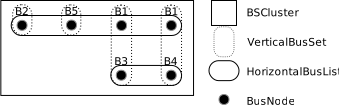
Step 4: Build of the List<Subsection>subsections
Done by calling Subsection::createSubsections. See Subsection.
Final result